

Best Rechargeable Fans in 2026 – Answer Fast
Rechargeable fans use built-in batteries to deliver airflow during power outages
Rechargeable fans are designed with internal batteries, allowing them to keep running even when electricity is unavailable. Choosing the right battery-powered cooling solution becomes easier when you understand airflow basics in our ceiling fan airflow performance guide.
Battery-powered airflow creates cooling without electricity
These fans rely on stored energy instead of direct power, making them perfect for blackouts, travel, and off-grid use.
Portable fan systems maintain comfort in blackout conditions
Because they are lightweight and cordless, rechargeable fans can be used anywhere—home, office, or outdoors.
What Are Rechargeable Fans and How Do They Work?
Built-in battery stores electrical energy for fan operation
Rechargeable fans contain batteries that store energy for later use.
Lithium-ion batteries deliver long-lasting power
Most modern fans use lithium-ion batteries, which provide longer runtime and faster charging.
Charging cycles determine usage duration
Battery life depends on how often the fan is charged and how efficiently it uses power.
An electric motor converts stored energy into airflow
The motor is responsible for turning stored energy into motion.
Motor rotation drives blade movement
When powered, the motor spins the blades to generate airflow.
Energy conversion determines efficiency
Higher efficiency means more airflow with less battery drain.
Control systems regulate speed and battery usage
Rechargeable fans include controls to manage performance.
Speed settings adjust airflow output
Users can choose low, medium, or high speeds depending on cooling needs.
Power modes extend battery life
Eco or low-power modes help the fan run longer during extended outages.
Key Features That Define the Best Rechargeable Fans in 2026
Battery capacity determines runtime performance
Higher mAh increases operating hours
Battery capacity (measured in mAh) directly affects how long a fan can run. Larger capacity = longer usage during outages.
Battery efficiency impacts power usage
Efficient batteries deliver more airflow while consuming less energy, extending overall runtime.
Airflow strength determines cooling effectiveness
High-speed blades increase air movement
Stronger motors and optimized blades generate higher airflow for better cooling.
Strong airflow improves comfort
More powerful airflow helps you feel cooler faster, especially in hot climates.
Charging speed affects usability
Fast charging reduces downtime
Quick recharge times ensure the fan is ready when you need it most.
USB charging increases convenience
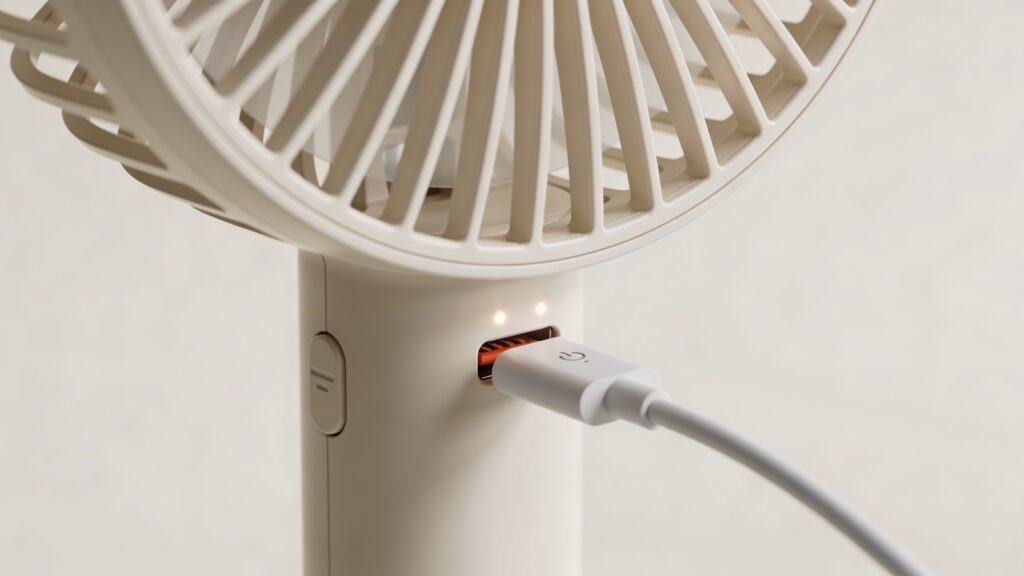
USB-compatible fans can be charged via power banks, laptops, or solar systems.
Portability improves flexibility
Lightweight design enhances mobility
Easy-to-carry fans are ideal for moving between rooms or outdoor use.
Compact size supports easy storage
Smaller fans fit well in tight spaces and are easy to store when not in use.
Types of Rechargeable Fans Available in 2026
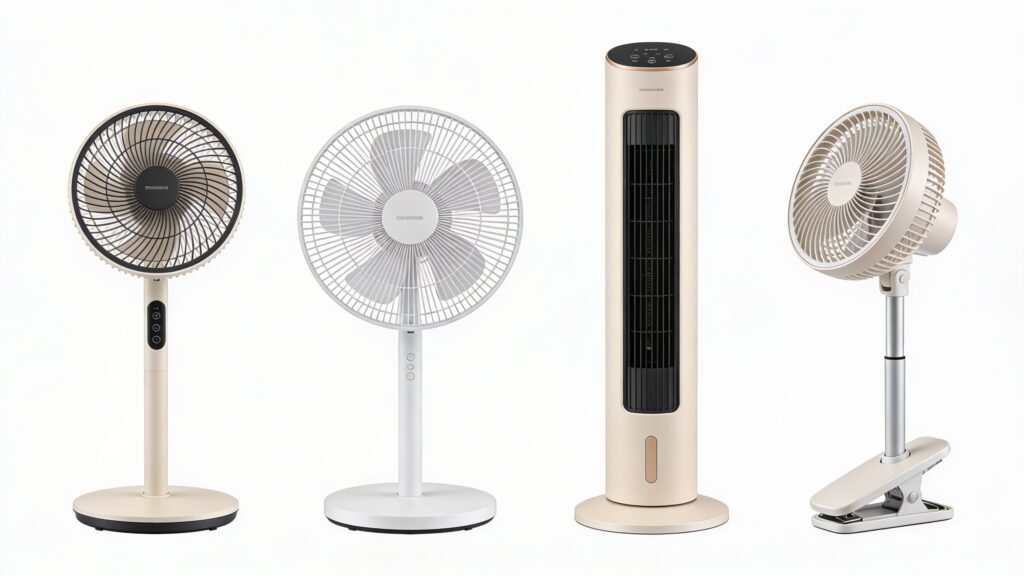
Rechargeable pedestal fans deliver strong airflow
Adjustable height improves coverage
These fans can be raised or lowered to target airflow where needed.
Oscillation spreads airflow evenly
Side-to-side movement distributes air across a wider area.
Rechargeable table fans support personal cooling
Compact design targets small areas
Perfect for desks, bedside tables, or close-range cooling.
Close-range airflow increases efficiency
Direct airflow makes them effective for individual use.
Rechargeable tower fans save space
Vertical airflow distributes air evenly
They push air upward in a smooth column for balanced cooling.
Slim design fits modern rooms
Ideal for apartments or rooms with limited space.
Rechargeable clip fans provide flexible positioning
Clip mechanism attaches to surfaces
They can be mounted on desks, beds, or shelves.
Directional airflow targets specific zones
Adjustable heads allow precise airflow control.
Best Rechargeable Fans in 2026 – Comparison Table
| Feature | High Battery Fans 🔋 | High Airflow Fans 💨 | Portable Fans 🎒 |
|---|---|---|---|
| Battery Life | Very Long | Medium | Medium–Long |
| Airflow Strength | Medium | Very High | Low–Medium |
| Charging Time | Longer | Medium | Fast |
| Portability | Medium | Low–Medium | Very High |
| Best Use Case | Long outages | Extreme heat | Travel / personal use |
Battery life vs airflow performance comparison
Fans with larger batteries last longer but may sacrifice some airflow power.
Power vs portability breakdown
More powerful fans are usually larger, while portable models trade power for convenience.
Charging time vs usage efficiency
Fast-charging fans are more practical for daily use, especially in areas with frequent outages.
Best Rechargeable Fans in 2026 – Which Is Better?
High-capacity battery vs high airflow performance
Long runtime vs strong cooling output
- High-capacity battery fans: Run longer (ideal for outages and overnight use)
- High airflow fans: Deliver stronger cooling but drain faster
In real-world testing, runtime often drops significantly at higher speeds, meaning powerful fans trade battery life for performance
Efficiency vs power comparison
- Efficient fans (with modern motors) balance airflow + battery life
- Poor-quality fans waste energy and lose charge quickly
Portable fans vs high-power fans
Mobility vs performance trade-off
- Portable fans: Lightweight, easy to carry, but lower airflow
- High-power fans: Strong airflow, but heavier and less mobile
Best choice based on usage scenario
- Travel / personal use → Portable fan
- Home / extreme heat → High-power rechargeable fan
Direct answer and final recommendation
Best option for power outages
👉 High-capacity rechargeable fan (large battery + medium airflow)
- Lasts longer during blackouts
- More reliable overnight
Best option for daily use
👉 Balanced fan (moderate battery + efficient airflow)
- Good mix of performance and battery life
- Ideal for work, sleep, and regular cooling
Who Should Buy Rechargeable Fans in 2026
Users in areas with frequent power outages
Rechargeable fans are essential where electricity is unreliable—they provide cooling without grid power
Travelers needing portable cooling
Compact battery fans are perfect for commuting, hotels, and long trips.
Small room users needing compact solutions
Tower or table rechargeable fans work well in tight spaces.
Outdoor users requiring battery-powered airflow
Great for camping, events, or working outdoors where no power source is available.
Best Use Cases for Rechargeable Fans
Power outage emergency cooling
The primary use is keeping cool during blackouts when traditional fans stop working.
Camping and outdoor activities
Rechargeable fans are widely used outdoors because they don’t require plug-in power and are easy to carry
From user experience (Reddit):
“2.0Ah battery lasted ~6 hours… bringing extra battery helped through the weekend.”
Work-from-home setups
Perfect for desks and small offices where silent, low-power cooling is needed.
Small apartment cooling solutions
Rechargeable fans provide flexible airflow without taking up much space or increasing electricity bills.
Final Insight
- If your priority = long backup during outages → choose high battery capacity
- If your priority = strong cooling → choose high airflow power
- If your priority = daily comfort → choose balanced performance
Pros and Cons of Rechargeable Fans
Advantages of battery-powered fans
- Work during power outages: Reliable cooling even when electricity is unavailable
- Portable and flexible: Easy to move between rooms or use outdoors
- Energy efficient: Consume less power compared to AC systems
- Multi-purpose use: Ideal for home, travel, camping, and emergencies
Limitations of rechargeable cooling systems
- Limited runtime: Depends on battery capacity and speed settings
- Less powerful than wired fans: High airflow drains battery quickly
- Charging required: Must be recharged regularly to stay usable
- Performance varies by quality: Low-end models may deliver weak airflow
How to Choose the Best Rechargeable Fan?
Battery capacity determines runtime needs
Long outages require high-capacity batteries
Choose fans with large mAh ratings for extended use during blackouts.Portable cooling needs vary by environment, which we explain in our personal cooling fan setup.
Short usage allows smaller batteries
For occasional or short-term use, compact battery fans are sufficient.
Airflow strength determines cooling performance
High airflow improves comfort
Stronger airflow is essential for hot climates and larger rooms.
Low airflow limits effectiveness
Weak fans may not provide enough cooling, especially in extreme heat
Charging options affect convenience
USB charging increases flexibility
Allows charging via power banks, laptops, or car adapters.
Solar charging supports off-grid use
Useful for outdoor activities or areas with unreliable electricity.
Build quality affects durability
Strong materials extend lifespan
High-quality construction ensures long-term performance.
Cheap designs reduce performance
Low-cost materials often lead to weaker airflow and shorter lifespan.
Related Cooling Guides
- High airflow standing fan guide
- Personal cooling fan setup
- Space-saving cooling solutions
- Home ventilation airflow guide
- Ceiling fan airflow performance guide’
Frequently Asked Questions
How long do rechargeable fans last on a full charge?
Most rechargeable fans last 4 to 12 hours, depending on battery size and speed settings.
Are rechargeable fans powerful enough for hot climates?
Yes, but only high-airflow models perform well in extreme heat. Smaller fans are better for personal cooling.
Which battery type is best for rechargeable fans?
Lithium-ion batteries are the best due to longer life, faster charging, and better efficiency.
Can rechargeable fans replace electric fans?
Not completely—they are best used as backup or portable solutions rather than full replacements.
Are rechargeable fans worth buying in 2026?
Yes, especially in areas with frequent outages or for users needing portable cooling.
Final Verdict
Rechargeable fans deliver reliable airflow during power outages
They are essential tools for staying comfortable when electricity is unavailable.
Performance depends on battery capacity and airflow strength
A balance between these two factors determines overall effectiveness.
The best choice depends on usage needs and environment
- Long outages → High-capacity battery fan
- Strong cooling → High airflow fan
- Everyday use → Balanced performance fan
Thanks for breaking down how rechargeable fans work—especially the part about lithium-ion batteries and energy efficiency. It really helps clarify why some models hold up better during power outages. I’m curious how the motor design affects overall battery life in high-use scenarios.