


Best Fans for Hot Climates in 2026:
The best fans for hot climates in 2026 are high-airflow ceiling fans, powerful pedestal fans, and energy-efficient tower fans because they create strong airflow, improve air circulation, and deliver consistent cooling in extreme heat.
These fans outperform basic models by increasing air velocity, reducing humidity discomfort, and maintaining airflow across large spaces.
Introduction
Best fans for hot climates in 2026 focus on airflow strength, efficiency, and adaptability.
Extreme heat demands more than simple air movement. It requires fans that actively push air across your body and room to create a cooling effect.
This guide breaks down everything you need to know, from fan types to buying decisions, so you can choose a fan that actually cools—not just spins.
Best Fans for Hot Climates in 2026 – Types Explained
Ceiling Fans
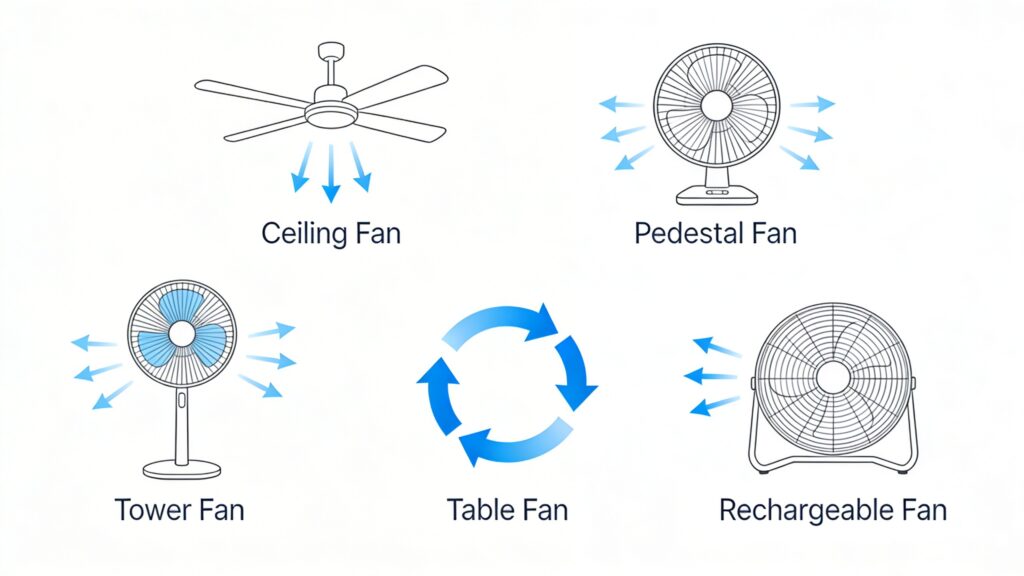
Ceiling fans deliver the strongest whole-room airflow.
Large blades rotate at optimal angles to push air downward, creating a continuous cooling breeze. This design reduces heat buildup in large rooms.
Ceiling fans work best in bedrooms, living rooms, and open spaces.
Related: ceiling fan airflow performance guide
Pedestal Fans
Pedestal fans create directional high-speed airflow.
Adjustable height and oscillation allow targeted cooling. This design focuses airflow exactly where you need it.
Pedestal fans excel in hot climates where direct cooling matters more than room-wide circulation.
👉 Related: high airflow standing fan guide
Tower Fans
Tower fans provide compact and consistent airflow.
Vertical airflow design spreads air evenly across the room. Slim structure fits small spaces without sacrificing performance.
Tower fans suit apartments and offices.
👉 Related: space-saving cooling solutions
Table Fans
Table fans deliver close-range cooling power.
Small size allows placement near your body. This positioning increases perceived cooling.
They work best for desks and bedside use.
👉 Related: personal cooling fan setup
Rechargeable Fans
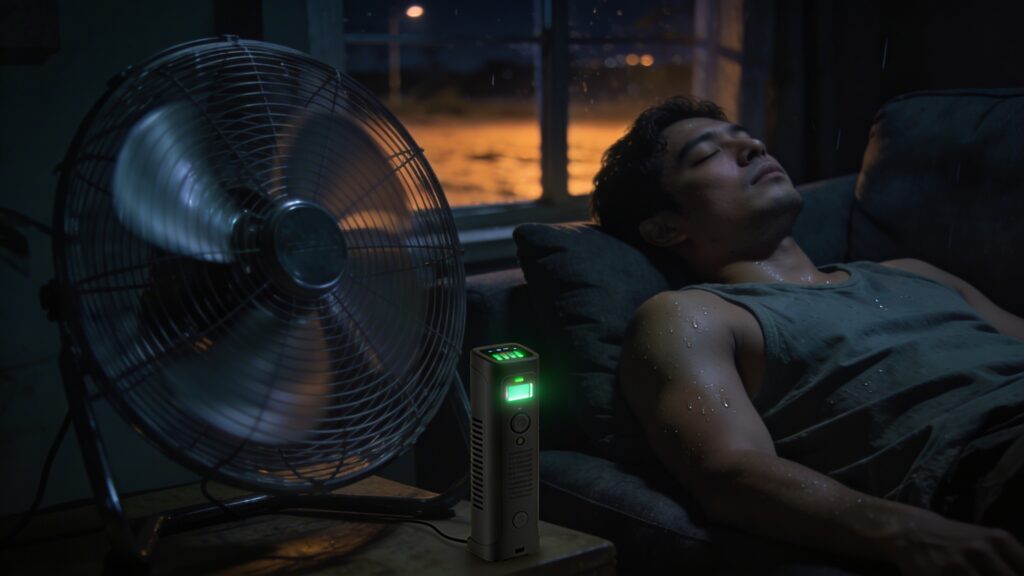
Rechargeable fans maintain cooling during power outages.
Built-in batteries allow uninterrupted airflow. This feature becomes critical in regions with unstable electricity.
They are essential for hot climates with frequent blackouts.
👉 Related: best backup cooling solutions
Comparison Table – Fan Types
| Fan Type | Airflow Power | Best Use Case | Portability | Energy Efficiency |
|---|---|---|---|---|
| Ceiling Fan | Very High | Large rooms | No | High |
| Pedestal Fan | High | Direct cooling | Medium | Medium |
| Tower Fan | Medium | Small spaces | High | High |
| Table Fan | Low-Medium | Personal cooling | Very High | High |
| Rechargeable | Medium | Power outages | High | Medium |
Best Fans for Hot Climates in 2026 – Key Features
Airflow Power
High CFM ratings create stronger cooling.
CFM (Cubic Feet per Minute) measures airflow output. Higher values push more air across your body.
Fans with high CFM perform better in extreme heat.
External reference: https://en.wikipedia.org/wiki/Airflow
Blade Design
Blade shape determines airflow efficiency.
Aerodynamic blades cut through air smoothly. This design increases speed and reduces resistance.
More blades do not always mean better performance.
Oscillation
Oscillation spreads airflow across the room.
Side-to-side movement distributes air evenly. This reduces hot spots and improves comfort.
Pedestal and tower fans benefit most from this feature.
Energy Efficiency
Efficient motors reduce electricity usage.
Modern fans use less power while maintaining airflow. This lowers energy costs over time.
Noise Level
Low noise improves comfort during sleep.
Quiet operation allows continuous use without disturbance.
Best Fans for Hot Climates in 2026 – Which Is Better?
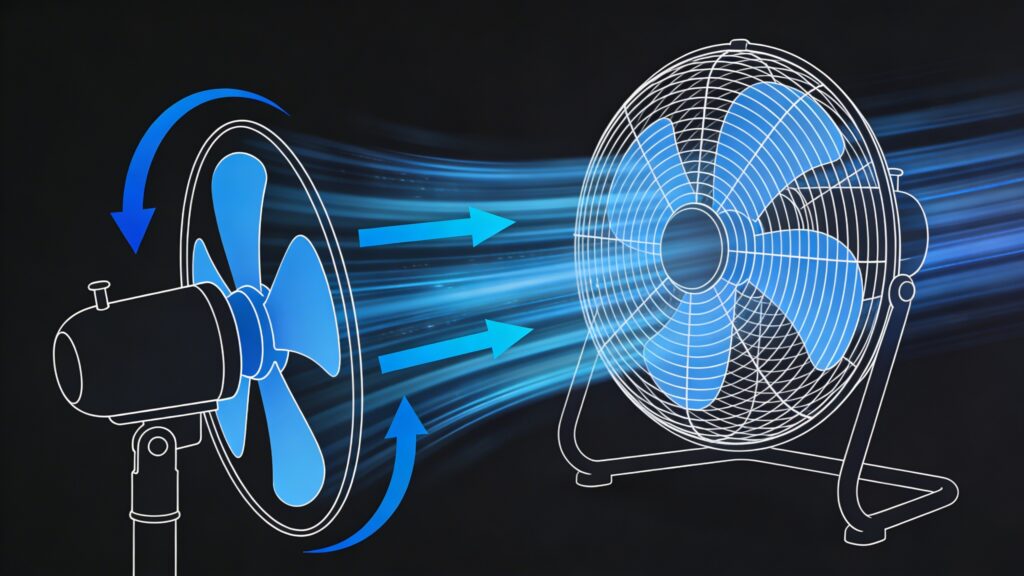
Ceiling fans are better for whole-room cooling, while pedestal fans are better for direct airflow.
Ceiling fans create consistent airflow across large areas. Pedestal fans deliver targeted cooling with higher intensity.
Tower fans offer balance, while rechargeable fans add reliability.
Who Should Choose a Ceiling Fan vs. a Pedestal Fan
Choose Ceiling Fan if:
- You need full-room cooling
- You want energy efficiency
- You prefer permanent installation
Choose Pedestal Fan if:
- You need strong direct airflow
- You want portability
- You live in extreme heat conditions
Pros and Cons
Pros
- Strong airflow improves cooling
- Energy-efficient operation saves money
- Multiple options for different needs
- Portable models increase flexibility
- Ceiling fans require installation
- Some fans produce noise
- Low-quality fans deliver weak airflow
- Rechargeable fans have limited battery life
How to Choose the Right Fan
Room Size Matters
Large rooms require high airflow fans.
Ceiling fans work best in big spaces. Smaller rooms benefit from tower or pedestal fans.
Climate Conditions
Extreme heat requires stronger fans.
Hot climates demand high-speed airflow and durable motors.
Power Availability
Unstable electricity requires backup solutions.
Rechargeable fans ensure continuous cooling.
Budget
Higher quality fans provide better performance.
Investing in a powerful fan delivers long-term comfort.

External Insights
- Air movement improves cooling efficiency: https://en.wikipedia.org/wiki/Fan_(machine)
- Thermal comfort depends on airflow: https://en.wikipedia.org/wiki/Thermal_comfort
FAQs
1. Which fan is best for extreme heat?
High-speed pedestal fans and ceiling fans perform best.
They generate strong airflow that reduces heat discomfort.
2. Are tower fans good for hot climates?
Tower fans work well in small spaces.
They provide consistent airflow but less power than pedestal fans.
3. Do fans actually cool a room?
Fans cool people, not rooms.
They increase airflow, which improves heat evaporation from the body.
4. Is CFM important when choosing a fan?
CFM directly affects cooling performance.
Higher CFM means stronger airflow.
5. Are rechargeable fans worth it?
Rechargeable fans provide reliability.
They maintain cooling during power outages.
Final Verdict
The best fans for hot climates in 2026 are ceiling fans for full-room cooling and pedestal fans for direct, powerful airflow.
Choose based on your environment:
- Large room → Ceiling fan
- Extreme heat → Pedestal fan
- Small space → Tower fan
- Power outages → Rechargeable fan
The right fan transforms heat into comfort. Complete Buying Guide for Maximum Cooling

It is always helpful to discuss the small details around “How to choose a tan shade for cool skin undertones”: skin condition, booking time, activity level after the session, contact with clothing, and the skincare products used afterward. Those details often decide whether the result looks polished or questionable. I would be interested in reading real cases where better prep and calmer aftercare clearly improved the final look compared with a previous attempt.
thanks for your massage
This breakdown of fan types for hot climates really highlights the importance of airflow strategy—especially how ceiling fans excel in large spaces while pedestal and tower fans offer targeted cooling. It’s a helpful reminder that effective cooling isn’t just about speed, but about moving air where it’s needed most. Thanks for the clear, practical guidance!
thanks for your massage